Ibadan Has Nigeria's Fastest-Growing Rental Market: What It Means for Land Investors in 2026
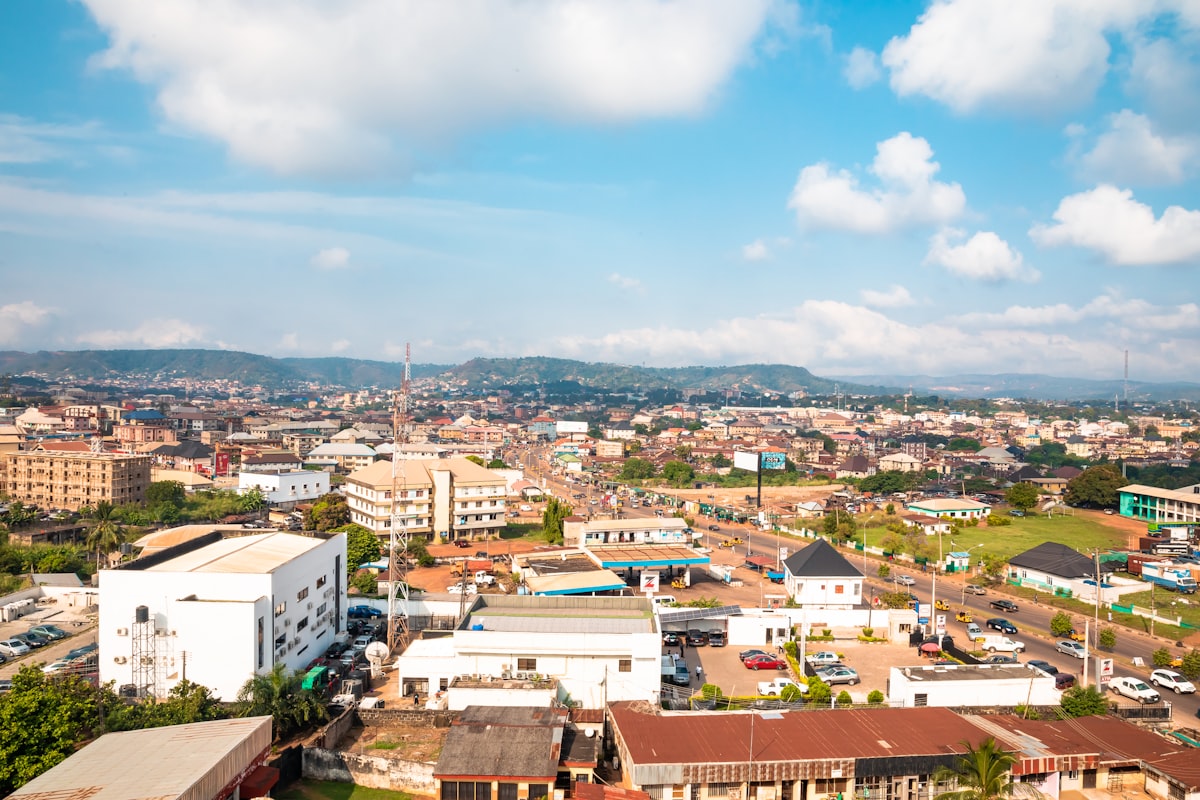
Ibadan's Rental Growth Is Outpacing Every Major Nigerian City
Over the past 18 months, Ibadan has quietly become the fastest-growing rental market in Nigeria by percentage. According to the Nigeria Housing Market 2026 rental forecast, rent prices in premium Ibadan neighbourhoods like Bodija and Jericho have risen by nearly 50%. The citywide average for a decent 2-bedroom flat now sits around ₦1.5 million annually.
What makes this especially significant for land investors is the gap that still exists between Ibadan and Lagos. Rents in Ibadan trail Lagos by 50% to 70%, averaging between ₦1.2 million and ₦2 million per year for 2-bedroom apartments, according to The Africanvestor's 2026 rental data. That gap is narrowing fast, and the narrowing is exactly what drives land appreciation.
For investors who have been watching Ibadan's real estate market from the sidelines, the rental data tells a clear story: demand is surging, supply is lagging, and the fundamentals for land investment have never been stronger.
What Is Driving the Rental Boom?
Three forces are pushing Ibadan's rental market forward at the same time, and their combined effect is accelerating price growth across the city.
Lagos Spillover and Remote Work Migration
Lagos is running out of affordable housing. The cost of renting a decent apartment in mainland Lagos now starts at ₦3 million to ₦5 million per year for a 2-bedroom flat. For professionals who can work remotely, or whose employers allow hybrid arrangements, Ibadan offers a drastically lower cost of living with increasingly strong infrastructure connections.
The Lagos-Ibadan Standard Gauge Railway, relaunched for container haulage by the Nigerian Railway Corporation, has opened a direct commuter corridor. Professionals can live in Ibadan and reach Lagos in under two hours by rail, making the city a practical base for those who need occasional access to Lagos. As BusinessDay recently noted, Ibadan is emerging as the natural anchor for Lagos's overburdened population.
Population Growth Outstripping Housing Supply
Ibadan's metro population has crossed the 3 million mark and continues to grow at an estimated 3.5% annually, according to World Population Review data. This growth rate means the city adds tens of thousands of new residents each year, and the existing housing stock simply cannot keep pace.
Nigeria's housing deficit currently stands at 14.9 million units nationally, according to data released by the National Housing Data Technical Committee in early 2026. Cities like Ibadan bear a significant share of this deficit, creating intense demand for both rental units and new residential developments. The Oyo State Government has publicly committed to reducing the housing gap, but the scale of the challenge means private-sector investment and individual land ownership remain critical to closing it.
Infrastructure Investment Is Pulling in Businesses and Workers
The Oyo State Government has committed to several major infrastructure projects that are drawing investment and population into Ibadan:
- The Ibadan Circular Road: A 110 km ring road designed to loop around the entire metropolis. The first 32 km segment was inaugurated in early 2026, and areas near completed sections are already experiencing value jumps as accessibility improves.
- The Ibadan Inland Dry Port in Akinyele: Approved by the Federal Government, this facility will handle containerized cargo diverted from Lagos ports, creating a logistics hub and thousands of jobs within the Ibadan metro area.
- The 65 km Moniya-Ijaiye-Iseyin Road: This ₦9.9 billion road project has opened up previously inaccessible areas west and north of the city to commercial and residential development.
Each of these projects creates jobs, attracts workers, and generates demand for housing. That demand translates directly into rising rents and, by extension, rising land values.
Why Rising Rents Are a Green Light for Land Investors
Rental demand is one of the clearest indicators of underlying real estate value. When rents rise consistently in an area, it signals that more people want to live there than the current housing stock can accommodate. For land investors, this creates two distinct opportunities.
Capital Appreciation Is Already Happening
Land in Ibadan has shown strong appreciation trends over the past three years. According to Nigeria Property Centre data, land that sold for ₦4 million to ₦5 million in many Ibadan suburbs now commands ₦12 million to ₦18 million, depending on the exact location. That represents a 200% to 300% return in roughly three years.
Emerging areas along the Moniya-Iseyin corridor and the Ido axis still offer entry points below ₦5 million per plot. This price range has long disappeared from comparable Lagos growth corridors, where entry-level plots in developing suburbs now start above ₦15 million.
Build-to-Rent Returns Are Getting Stronger
Investors who buy land now and develop rental properties are positioning themselves in a market with rapidly improving yields. With average rents climbing toward ₦1.5 million to ₦2 million for 2-bedroom flats, and construction costs in Ibadan still significantly lower than in Lagos, the rental yield math is increasingly favourable.
Even investors who prefer to hold land without developing it are benefiting. The rising rental market creates pressure for new construction, which increases competition for available plots and pushes land prices upward. Either way, the investor wins.
How Ibadan Compares to Other Nigerian Markets
The broader Nigerian real estate sector is on an upward trajectory. Following the NBS GDP rebasing, the combined contribution of real estate and construction to Nigeria's GDP now exceeds ₦77 trillion, representing 15.9% of national output.
Foreign direct investment in Nigerian real estate reached $1.8 billion in 2025, the highest annual inflow in five years, according to preliminary NBS and CBN data. Much of this capital is flowing into logistics, mixed-use, and residential developments outside Lagos.
Within this landscape, Ibadan stands out for a specific reason: it combines Lagos-adjacent accessibility with prices that remain a fraction of what comparable locations cost in Lagos, Abuja, or Port Harcourt. A 4-bedroom terrace home in Ibadan can be acquired for ₦40 million to ₦60 million, according to Baay Realty's 2026 property guide, compared to three or four times that amount in comparable Lagos neighbourhoods. That combination of affordability and connectivity is what makes the rental growth sustainable rather than speculative.
According to ThinkMint's 2026 hotspot analysis, Ibadan ranks among the top seven Nigerian real estate hotspots that institutional and individual investors are watching most closely this year. The city's inclusion alongside traditional heavyweights like Lagos and Abuja signals a shift in how the market perceives Ibadan's long-term potential.
Where in Ibadan Should You Focus?
Not all parts of Ibadan are growing at the same pace. Based on current infrastructure investment and demand patterns, these corridors offer the strongest combination of affordability and growth potential.
Moniya-Iseyin Road Corridor
The completion of the 65 km Moniya-Iseyin Road has transformed this axis from a quiet stretch into a fast-moving investment corridor. Land along this road benefits from proximity to the Moniya railway station and the planned Inland Dry Port in Akinyele. Land Republic's Premier City Phase I and Phase II estates sit along this corridor, offering structured estate plots with verified titles in one of Ibadan's highest-growth zones.
Ido Axis
Ido has emerged as one of the breakout suburbs in Ibadan's real estate market. Located along the route between Ibadan and the Lagos-Ibadan Expressway, Ido offers proximity to multiple growth catalysts while maintaining affordable price points. The Pearl Residence by Land Republic provides access to this corridor with flexible payment plans, making it accessible even for first-time land buyers.
Ibadan Circular Road Catchment
Areas within the catchment of the Ibadan Circular Road are seeing accelerated price growth as the first 32 km phase nears completion. The road is designed to eventually encircle the entire metropolis, and properties located near completed or in-progress sections already command premium prices compared to areas further from the route.
Timing Matters: Why Waiting Could Cost You
One pattern that repeats across Nigerian real estate markets is this: by the time a location is widely recognized as a growth zone, the biggest price gains have already happened. The investors who profited most from Lekki's transformation, or from the Ajah corridor explosion, were the ones who bought before mainstream attention arrived.
Ibadan's rental data suggests the city is still in the early-to-middle stage of its growth cycle. Prices have risen significantly, but entry points under ₦5 million still exist in several corridors. The infrastructure projects that will drive the next wave of appreciation are under construction now, not years away. The window for affordable entry is open, but it will not stay open indefinitely.
Take the Next Step
If you have been considering a land investment in Ibadan, the rental market data makes a compelling case for acting now. Prices in the city's growth corridors are rising, rental demand is accelerating, and major infrastructure projects are reshaping which areas will see the biggest gains over the next three to five years.
Land Republic offers estate plots in several of Ibadan's fastest-growing corridors, including Premier City along the Moniya-Iseyin Road, The Pearl Residence in Ido, and Ariya Springs. All properties come with verified titles, structured payment plans, and the transparency that Nigerian land buyers deserve.
To explore available plots and current pricing, visit landrepublic.co/properties or call +234 812 222 2283 to speak with a property advisor today.