Benefits of Buying Land in Ibadan: Why Smart Nigerian Investors Are Choosing Oyo State in 2026
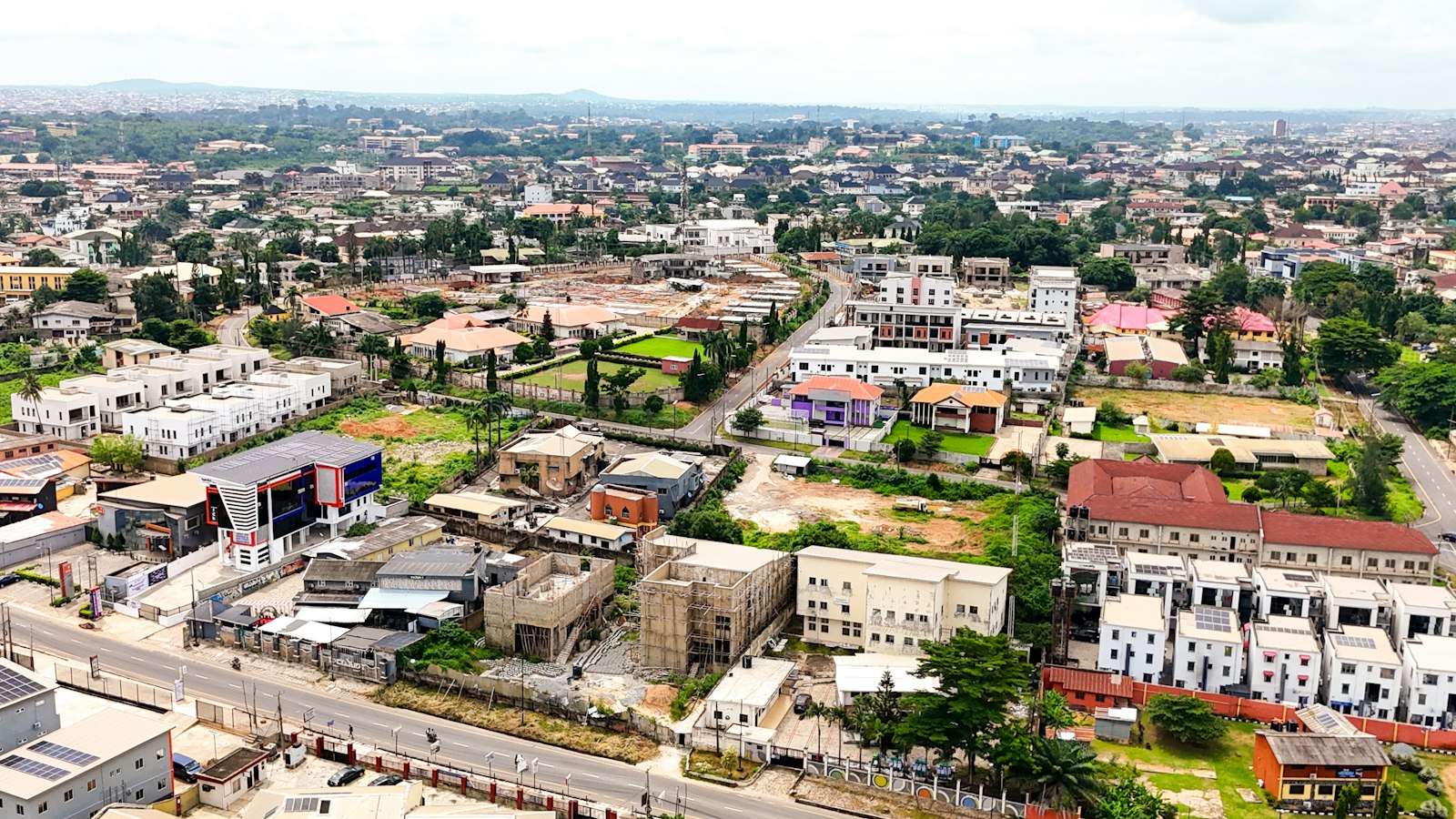
If you have been watching the Nigerian property market closely, you have probably noticed a quiet shift. More investors, both local and diaspora, are looking beyond Lagos. They are looking at Ibadan.
And the numbers back them up.
Ibadan is not just Nigeria's largest city by land area. It is one of Africa's fastest-growing urban centres, with land prices that still sit well below what Lagos commands. When you combine that with a state government spending over half a trillion naira on infrastructure and a railway line that now connects Ibadan directly to Lagos ports, the investment case becomes hard to ignore.
Here are five concrete benefits of buying land in Ibadan right now.
1. You Get More Land for Far Less Money
The most immediate advantage is price. According to Ownkey's Q2 2026 Ibadan Property Guide, property in Ibadan is priced at roughly 50 to 65 percent below equivalent properties in Lagos.
That is not a small gap. It means a plot of land that would cost you N15 million in a developing Lagos suburb could cost between N5 million and N7.5 million in a comparable Ibadan location. For investors working with a fixed budget, Ibadan allows you to acquire more land, diversify across multiple plots, or keep capital in reserve for development.
The price advantage is especially sharp along growth corridors like the Ido axis, the Moniya-Iseyin corridor, and the Oluyole area. These are locations where Land Republic operates estates like The Pearl Residence and Premier City, offering verified titles and structured payment plans that make entry even more accessible.
2. Ibadan's Population Is Growing Rapidly, and So Is Demand
Population growth drives land demand. That is a fundamental rule of real estate.
Ibadan's metro area population reached an estimated 4.29 million in 2026, growing at approximately 3.6 percent year-on-year, according to Macrotrends. That pace has been accelerating steadily. Five years ago, the annual growth rate was closer to 2.5 percent.
Ibadan has also been named among six Nigerian cities ranked among the fastest-growing in Africa, alongside Lagos, Abuja, and Onitsha. The UN Human Settlements Programme has separately classified it among the fastest-growing cities in sub-Saharan Africa.
What does this mean for land buyers? It means a growing pool of people who need housing, commercial space, and services. That sustained demand pushes land values upward over time. Buying now, while prices are still relatively low, positions you ahead of the curve.
3. Infrastructure Is Transforming Ibadan's Connectivity
Infrastructure is what separates a city with potential from one that actually delivers returns. Ibadan is currently seeing some of the most significant infrastructure investments outside Lagos.
The Lagos-Ibadan Standard Gauge Railway
The Lagos-Ibadan standard gauge rail line is now fully operational, with trains evacuating containers directly from Apapa Port in Lagos to Ibadan, according to The Guardian. This rail connection cuts travel time between the two cities drastically and reduces dependence on congested road networks.
For property investors, this railway has an important secondary effect: it makes Ibadan a viable commuter and logistics hub for people and businesses connected to Lagos. Workers can live in Ibadan and access Lagos-based opportunities, while businesses can base warehousing and operations in Ibadan at a fraction of Lagos costs.
The Ibadan Inland Dry Port
Perhaps the biggest game-changer on the horizon is the Ibadan Inland Dry Port, a N43.24 billion project with a planned capacity of 80,000 TEUs. The project is being developed as a Public-Private Partnership and has been linked to China Railway Construction Corporation (CRCC), according to The Guardian. Once operational, this facility would bring port logistics inland, creating jobs, attracting warehousing and industrial investment, and pushing up land values in surrounding areas significantly.
Road Expansion
The completed Lagos-Ibadan Expressway has already repositioned Ibadan, making it reachable from Lagos in under 90 minutes during off-peak hours. Additional road projects, including the dualisation of the Olorunsogo Expressway and ongoing work on the Ibadan Circular Road, continue to improve access within the city and connect previously underserved areas to the urban core.
4. The Oyo State Government Is Spending Big on Growth
Government spending is a reliable signal of where growth is heading. In 2026, the Oyo State Government signed a N892 billion budget tagged the "Budget of Economic Expansion," according to Arise News.
What makes this budget particularly relevant to land investors is the allocation: approximately 56.7 percent, or N502.8 billion, is directed toward capital projects, according to The Conclave. That means roads, bridges, schools, hospitals, water systems, and other infrastructure that directly impacts land value in surrounding communities.
Governor Makinde has positioned Ibadan as a production-focused economy rather than a consumption-driven one. That distinction matters. Cities where governments invest in productive infrastructure tend to see sustained property appreciation, not just speculative bubbles that deflate when attention moves elsewhere.
5. Land Is a Proven Shield Against Naira Inflation
Nigeria's inflation rate stood at 15.69 percent as of April 2026, according to Nairametrics, citing NBS data. While the Central Bank of Nigeria projects inflation will moderate to an average of 12.94 percent by year-end, the reality is that the purchasing power of cash savings continues to erode month after month.
Land, by contrast, is a finite asset that tends to appreciate alongside or above inflation over time. In growth corridors like Ibadan, where population and infrastructure spending are both rising, land values have the potential to outpace inflation meaningfully.
Consider the alternative: leaving N10 million in a savings account earning 5 to 8 percent interest while inflation runs above 15 percent guarantees a real loss in purchasing power. Allocating that same capital to a well-located plot in a verified estate in Ibadan at least positions you to preserve value and potentially generate strong returns as the area develops.
What Makes Ibadan Different from Other Secondary Cities?
Nigeria has several secondary cities with growth potential, from Benin City to Enugu to Abeokuta. So why does Ibadan stand out?
Three factors set it apart:
Scale. With over 4 million people in its metro area, Ibadan already has the population base to sustain real estate demand at scale. This is not a town that needs to "grow into" its potential. The demand already exists.
Proximity to Lagos. No other major Nigerian city is as close to Lagos, the country's commercial capital, while offering land prices 50 to 65 percent lower. The Lagos-Ibadan rail and expressway make this proximity functional, not just geographical.
Institutional investment. The dry port, the railway, and the state budget are not small-scale, community-driven projects. They are institutional-grade investments that signal long-term commitment to Ibadan's growth trajectory.
How to Get Started with Land Investment in Ibadan
If you are considering buying land in Ibadan, the most important step is working with a developer that offers verified titles and transparent processes. Land disputes remain a real risk in Nigeria, and the cheapest plot is not always the smartest buy.
Land Republic currently offers properties in key Ibadan growth corridors:
- Premier City, Ibadan - Located along the Moniya-Iseyin corridor, one of Ibadan's fastest-appreciating zones
- The Pearl Residence, Ido - Positioned in the Ido axis, benefiting from university-driven demand and suburban expansion
- Ilu Ayo, Ibadan - An affordable entry point in Ido, Oyo State with strong long-term upside
All properties come with proper documentation, flexible payment plans, and the backing of a company that has been operating across Lagos, Oyo, and Ogun States for years.
The Bottom Line
Buying land in Ibadan in 2026 is not about chasing a trend. It is about following the data. The population is growing. The infrastructure is coming. The state government is investing heavily. And the price window is still open.
The investors who will benefit most are the ones who move while prices still offer room for significant appreciation. Ibadan's transformation from Nigeria's quiet second city to a real estate investment powerhouse is not a prediction. It is already happening.
Ready to explore your options? Visit landrepublic.co/properties or call +234 812 222 2283 to speak with an advisor today.