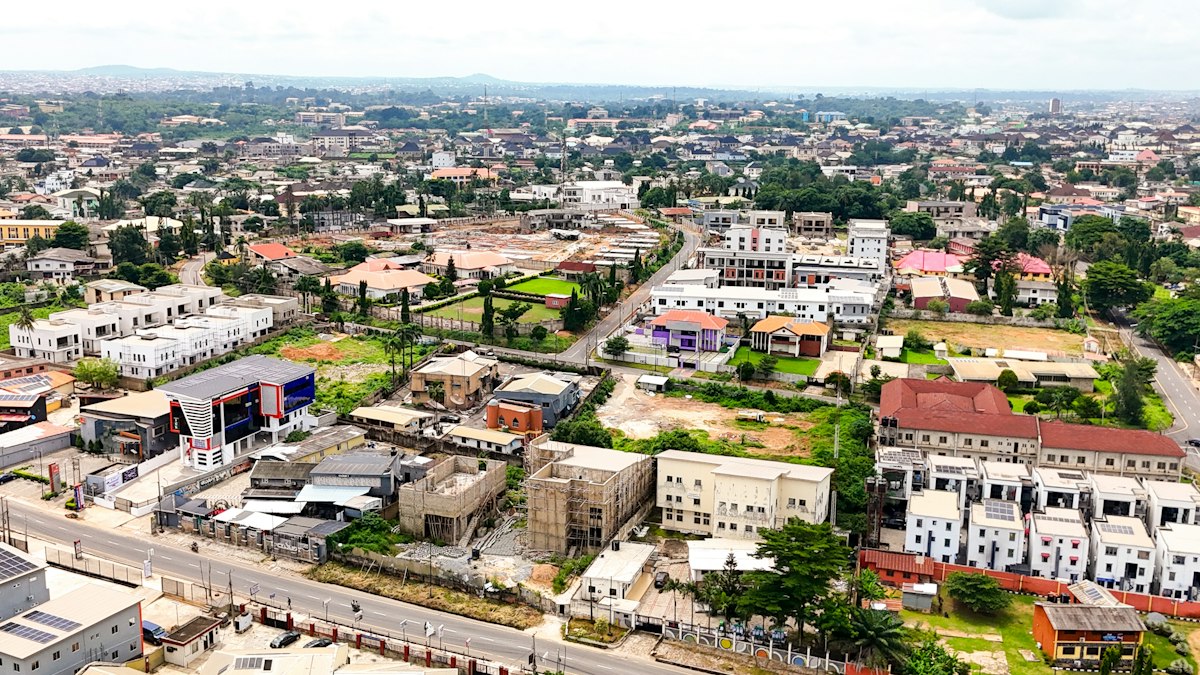
Oluyole, Ibadan: Why Smart Land Investors Are Rushing Into This Local Government in 2026
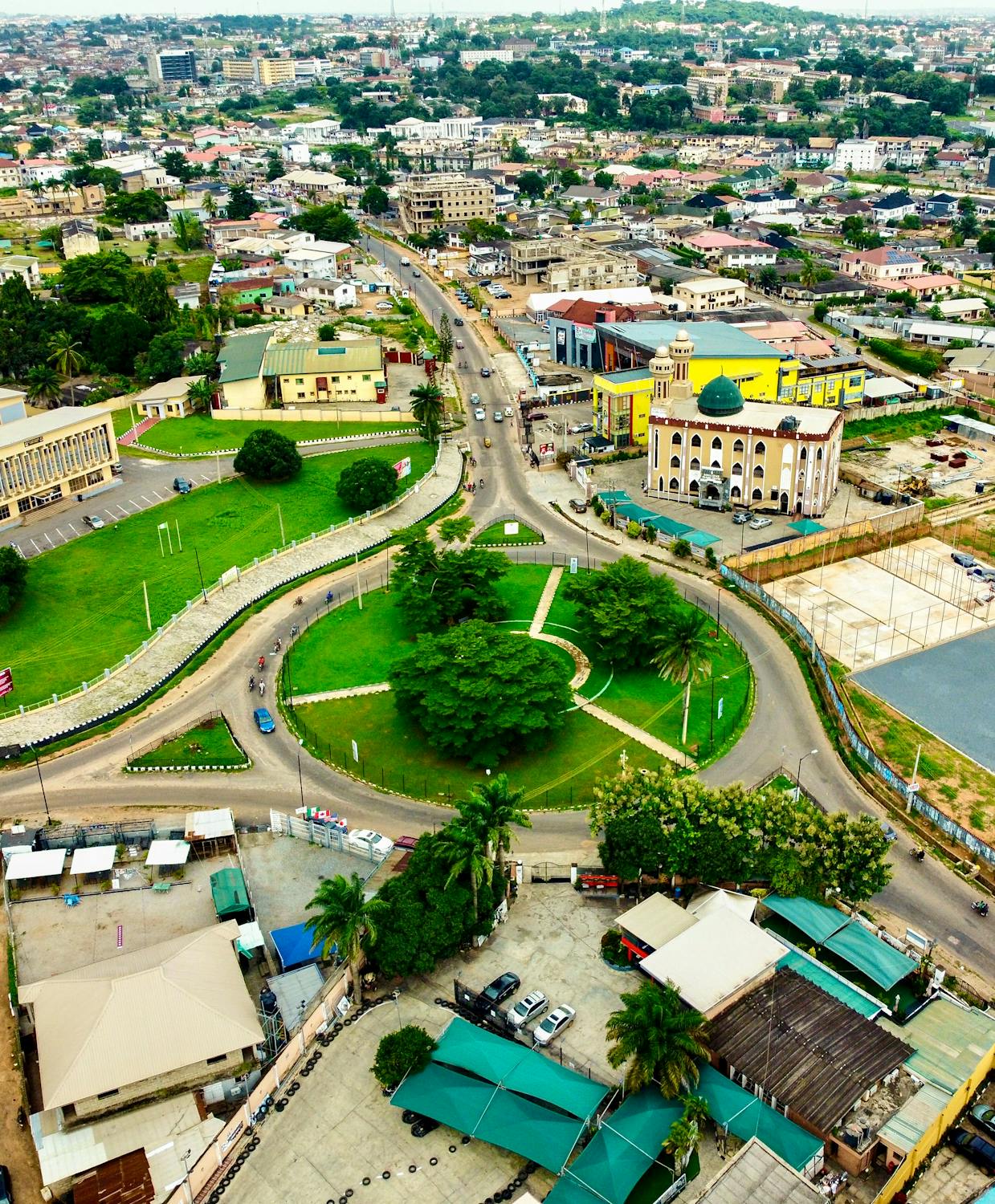
The Quiet Giant of Ibadan Real Estate
If you follow land and property conversations in Ibadan closely, you have probably noticed a pattern: Oluyole keeps coming up. Not in the loud, speculative way that characterizes some overhyped corridors, but in the steady, data-backed way that serious investors pay attention to.
Oluyole Local Government Area sits in a unique position within the Ibadan metropolis. It shares boundaries with Ibadan South West, Ibadan South East, Ona Ara, and Ido Local Governments, and also borders Ogun State through Obafemi Owode, Odeda, and Ijebu North LGAs. That cross-state boundary is not just geography. It is an economic corridor that connects Ibadan directly to Lagos through the Lagos-Ibadan Expressway, one of the most commercially vital routes in West Africa.
The local government was established in 1976, with its headquarters at Idi-Ayunre along the Old Lagos-Ibadan Road. It spans approximately 629 square kilometers, making it one of the largest LGAs in the Ibadan metropolitan area. And it is precisely this combination of size, location, and emerging infrastructure that is making Oluyole a magnet for capital.
What Is Actually Driving Land Values in Oluyole?
There are several converging factors, and understanding them is the difference between buying land at the right time and watching from the sidelines as values climb.
1. The Oluyole Free Trade Zone
This is the biggest catalyst. In August 2025, the Oyo State Government handed over 500 hectares of land along the Lagos-Ibadan Expressway in Oluyole LGA to Euro FMCG Universal Beverages Limited, a Singapore-based consumer goods company. The handover was made under a Public-Private Partnership arrangement.
By November 2025, Governor Seyi Makinde signed the formal Joint Venture Agreement, calling the Oluyole Free Trade Zone a catalyst for jobs, value creation, and long-term economic transformation. The first phase, named CGM-Oluyole Free Trade Zone, covers 500 hectares out of a total 1,700-hectare zone.
What does this mean for land investors? The FTZ is projected to host 10 to 12 factories focused on FMCG production, logistics hubs, warehouses, and even hospitality infrastructure. The developer has stated that 80 to 85 percent of employment will go to locals, with 95 percent of raw materials sourced domestically. Thousands of direct and indirect jobs are expected.
When a Free Trade Zone of this scale activates, surrounding land values do not stay flat. Every service provider, every housing developer, every commercial venture that supports the zone needs land. The demand multiplier effect is real and well-documented in other Nigerian FTZs like Lekki and Calabar.
2. The Oluyole Industrial Estate
Oluyole already has established industrial credentials. The Oluyole Industrial Estate is one of the most recognized manufacturing clusters in Ibadan, hosting firms across sectors. Research has shown that industrial clustering in this estate drives firm growth through supply chain interactions, knowledge spillovers, and shared infrastructure access.
This existing industrial base means Oluyole is not starting from zero. The Free Trade Zone builds on an already functioning economic engine, which reduces execution risk and accelerates value creation for nearby landholders.
3. Lagos-Ibadan Expressway Proximity
The Lagos-Ibadan Expressway rehabilitation has been one of the most significant infrastructure projects in Nigeria over the past decade. Oluyole LGA sits directly along this corridor. Reduced travel time between Lagos and Ibadan has already begun to shift commercial and residential demand patterns, with more Lagos-based professionals and businesses looking at Ibadan as a viable secondary base.
Denmark Estate by Dukiya, for example, is one of the premium developments positioned along this corridor within Oluyole, sitting just one minute from the expressway on the Ijebu-Ode road axis. These kinds of developments signal where the market is heading.
4. Institutional and Research Anchors
Oluyole hosts several major institutions that provide long-term economic stability. The Cocoa Research Institute of Nigeria (CRIN), located at Idi-Ayunre, is a federal research institution that has been operational for decades. The International Institute of Tropical Agriculture (IITA) headquarters is nearby. The Nigerian Institute of Science Laboratory Technology also operates in the area.
These institutions bring consistent employment, attract researchers and professionals from across Nigeria and internationally, and create demand for both residential and commercial real estate. Areas anchored by institutional presence tend to hold value better during market downturns and appreciate faster during upswings.
Current Land Prices: What the Market Looks Like Right Now
Land pricing in Oluyole varies significantly depending on location within the LGA. Here is a snapshot of what the market currently looks like based on active listings:
In Oluyole Estate, the premium residential zone, land prices range from about N25 million for smaller plots to N650 million for prime positions. The average sits around N85 million for land and N220 million for developed properties. Gated estates like Palm Garden, Star Gate, Blue Gate, and Larry Estate command premium pricing due to security, infrastructure, and exclusivity.
Along the industrial corridor near Podo and the Old Lagos Road, industrial land goes for N210 million and above per acre. Mixed-use land in Oluyole Industrial Estate has been listed at N250 million for 1,000 square meters.
In the broader Oluyole LGA beyond the estate, prices range from about N4 million per plot at the entry level in emerging areas to N95 million for established residential zones near Green Gate. The average across the broader LGA sits around N23 million.
The key takeaway: there is still a wide range, which means entry points exist for different investor profiles. But the window is narrowing as the Free Trade Zone development progresses.
The Historical and Cultural Layer
Oluyole is not just an investment thesis. It carries deep historical significance that adds a layer of identity and pride to the area.
The LGA is named after Bashorun Oluyole, a prominent Yoruba military commander and statesman who played a central role in establishing Ibadan as a regional power in the early 19th century. Born in the late 18th century to Olukuoye Ajala and Omoba Agbonrin, a daughter of Alaafin Abiodun of the Oyo Empire, Oluyole migrated to Ibadan during the collapse of Old Oyo. He rose to become Bashorun, effectively Ibadan's de facto leader, and commanded forces that expanded Ibadan's influence across Yorubaland.
The famous Oja'Ba market (Iba's Market) in Ibadan is named in his honor. His legacy is one of both military strategy and administrative capability. The area also hosts cultural sites including the Yemoja Shrine at Oni-Aboderin Village, the Twins Shrine at Aba-Ibeji, the Osanyin Shrine at Lagunju Village, and the Ayuku Cave at Apata Orile. These sites represent a living cultural heritage that connects the area's future development to its Yoruba roots.
What Buyers Should Watch Out For
Oluyole presents genuine opportunity, but it is not without risk. Here is what to be mindful of:
Title verification is non-negotiable. Ensure any land you are considering has a Certificate of Occupancy (C of O) or Governor's Consent. The Oyo State Government has explicitly warned land grabbers in the Oluyole Free Trade Zone corridor, which means there are disputed parcels in the area. Work with a property lawyer who understands the local land registry.
Distinguish between Oluyole Estate and Oluyole LGA. These are often confused. Oluyole Estate is a specific, well-developed residential enclave with premium pricing. Oluyole LGA is the broader local government area that includes both established zones and emerging areas. Your investment strategy should be clear on which you are targeting.
Infrastructure timelines matter. The Free Trade Zone is a massive project, but it is in early stages. The first 500 hectares have been handed over, and the JV agreement is signed. But full activation will take years. Buy with a medium-to-long-term horizon, not expecting overnight returns.
Conduct a proper land survey. Check for encumbrances, boundary disputes, and government acquisition notices. The FTZ development means the state government is actively acquiring land in the corridor, so verify that any parcel you are buying is not within the acquisition zone unless you are explicitly purchasing from the government allocation.
The Bottom Line for Investors
Oluyole is not speculative hype. It is a convergence of infrastructure investment, government policy, industrial history, and geographic advantage that is creating a genuine value corridor in Ibadan. The Free Trade Zone alone, with 1,700 hectares earmarked and 500 already activated, will reshape the economic landscape of this part of Oyo State over the next decade.
For land investors who think in 3 to 7 year horizons, the entry points that exist today in the broader Oluyole LGA are unlikely to remain at current levels once the FTZ reaches operational capacity. The industrial estate is already functioning. The expressway is already upgraded. The institutions are already anchored. What is coming next is the wave of commercial and residential demand that follows large-scale industrial activation.
The smart money is already moving. The question is whether you are positioned to move with it.
Land Republic helps you acquire verified, legally secure land in high-growth corridors across Nigeria. If you are considering Oluyole or any other strategic location, speak with our advisory team to understand what is available and what fits your investment profile.