Why Young Nigerian Professionals Are Choosing Ogun State Over Lagos for Their First Property in 2026
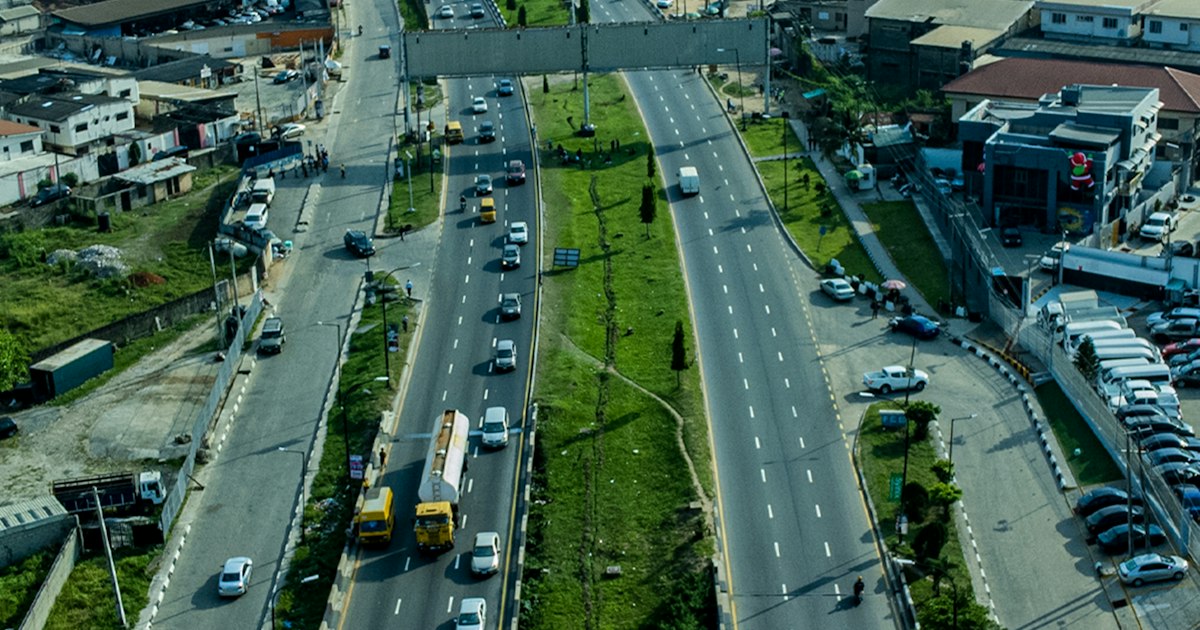
Every month, thousands of young Nigerian professionals face the same impossible equation: earn a decent salary in Lagos, then watch most of it disappear into rent, agency fees, and the cost of staying in a city that was never designed for this many people. The numbers tell a story that no amount of optimism can rewrite. But a growing number of buyers are finding an answer just 30 minutes north of the Lagos border.
The Lagos Housing Crisis Is Pushing Buyers Out
Nigeria's housing deficit has reached a staggering 28 million units, according to findings from the National Housing Data Technical Committee under the Federal Ministry of Housing and Urban Development. Of that number, 14.9 million are outright missing homes, while an additional 15.2 million existing homes are structurally defective or substandard. The country needs at least 550,000 new housing units per year just to keep pace, according to urban planners. Current supply is nowhere close to that figure.
Lagos, the country's economic capital, bears the worst of this pressure. Average annual rent for a two-bedroom apartment now sits at roughly ₦2.5 million, with upfront costs (agency fees, legal fees, and caution deposits) adding another 25 to 40 percent on top. For a young professional earning between ₦250,000 and ₦500,000 monthly, this math simply does not work. Multiple industry reports confirm that Lagos families spend 40 to 60 percent of their monthly income on rent alone.
The Lagos State Deputy Governor recently made headlines by advising young workers to consider living with their parents rather than paying high rent. That statement, while controversial, reflects a reality that market data confirms: Lagos is no longer an affordable city for first-time property buyers.
This is the backdrop against which a quiet migration has begun. Young professionals, first-time buyers, and forward-thinking investors are looking 30 minutes north of the Lagos border, to Ogun State.
What Makes Ogun State Different in 2026
Ogun State is not new to discussions about Lagos alternatives. But three structural shifts in 2026 have turned casual interest into serious buyer activity.
First, the population numbers. Ogun State's population has grown at roughly 3.4 percent annually since the last census in 2006, with current projections placing the population above 6 million residents. Much of this growth is concentrated in areas bordering Lagos: Mowe, Ofada, Ibafo, and Magboro. These are not people moving to the countryside. They are Lagos workers choosing a shorter commute and lower living costs over an unaffordable rent bill.
Second, industrial expansion. According to The Gazelle News, Governor Dapo Abiodun's administration has positioned Ogun State as Nigeria's preferred manufacturing and logistics hub. The Kajola Dry Port near the Lagos-Ibadan Railway corridor enables importers and exporters to process goods closer to their businesses rather than relying on congested Lagos seaports. Multiple industrial free trade zones, combined with Ogun's existing reputation as a manufacturing base, are creating local employment opportunities that did not exist five years ago.
Third, government housing investment. In 2026, the Ogun State Executive Council approved the construction of 450 units of two-bedroom semi-detached bungalows with basic infrastructure facilities. Additional housing projects include new residential quarters and multiple road rehabilitation projects across the state. These are documented, budgeted commitments that directly affect land values and living conditions.
Mowe-Ofada: The Corridor That Keeps Growing
If one area captures Ogun State's residential transformation, it is the Mowe-Ofada axis. Located along the Lagos-Ibadan Expressway, Mowe sits just 30 minutes from the Lagos state border and has emerged as Nigeria's fastest-growing real estate market outside Lagos.
The price data tells the story clearly. According to Nigeria Property Centre, there are 164 land listings available in Mowe-Ofada as of August 2026, with an average listing price of ₦7.5 million. A 300-square-metre plot in a gated estate costs between ₦3 million and ₦4 million. By comparison, the same plot size in Ajah or Sangotedo in Lagos would cost between ₦15 million and ₦25 million.
Land values across the corridor have appreciated at approximately 18 percent annually, with the broader area recording a 30.5 percent increase in overall property appreciation according to Lexshield Properties. For context, a plot bought for ₦3 million in 2023 could be worth ₦5 million or more today.
Most estates in the area also offer flexible payment structures, accepting initial deposits between ₦500,000 and ₦1.5 million, with payment plans stretching up to 24 months. For young buyers earning steady income but lacking the lump-sum capital to enter the Lagos market, this is the realistic entry point into property ownership.
The Red Line Rail Extension Changes the Calculation
The single most important infrastructure development for Ogun State property values in 2026 is the planned extension of the Lagos Red Line rail into Ogun State.
Governor Babajide Sanwo-Olu confirmed that discussions are underway with Ogun State Governor Dapo Abiodun to extend the Red Line corridor beyond its current Agbado terminus deeper into Ogun State. The Red Line currently connects Agbado (which sits right at the Lagos-Ogun border, near Mowe) to Oyingbo in central Lagos, with the second phase extending to Marina on Lagos Island. According to Nairametrics, the system is designed to transport up to 500,000 passengers daily, and Lagos recently acquired 24 new eight-car coaches to increase the line's capacity.
What does this mean for land buyers? Rail connectivity has historically been one of the most reliable predictors of property value increases in developing cities. When Mowe residents can commute to Ikeja or Lagos Island by rail in under 45 minutes, the "too far from Lagos" argument collapses entirely. At that point, the only thing left to compare is price, and Ogun State wins that comparison by a wide margin.
How Prices Compare: Lagos vs Mowe-Ofada
Here is a direct comparison using 2026 market data:
Land prices: A 300sqm plot in Ajah or Sangotedo (Lagos) costs ₦15M to ₦25M. The same plot size in Mowe-Ofada (Ogun) costs ₦3M to ₦4M. That is a 5x to 7x price difference for locations separated by a 30-minute drive.
Rent: Average annual rent for a two-bedroom apartment in Lagos runs roughly ₦2.5M, with some areas exceeding ₦4M. In Mowe, comparable apartments start from ₦1M per year.
Appreciation: Mowe-Ofada has delivered 50 to 70 percent appreciation over three years according to market estimates, compared to more modest single-digit annual gains in already-saturated Lagos corridors.
The pattern is clear. Buyers who enter the Mowe-Ofada corridor now benefit from both immediate affordability and strong long-term upside.
What Smart Buyers Are Looking for in Ogun State
Not all Ogun State land is created equal. Experienced buyers in 2026 focus on specific factors before committing their money.
Title Documentation
Properties with a Certificate of Occupancy (C of O) or excision gazette provide the strongest legal protection. Survey plans and a registered deed of assignment are minimum requirements for any transaction. Walk away from any seller who cannot produce these documents.
Estate Infrastructure
Gated communities with perimeter fencing, internal road networks, planned drainage, and electricity provisions consistently outperform standalone plots in both resale value and development potential. A serviced plot in a well-managed estate will appreciate faster and attract tenants more reliably than a plot without basic amenities.
Location Within the Corridor
Plots within 10 to 15 minutes of the Lagos-Ibadan Expressway retain their value and attract buyers more reliably than those further into the state interior. The closer to a current or planned rail station, the stronger the long-term investment case.
Land Republic's Mowe Prime estate is positioned directly along the Mowe-Ofada axis, with serviced plots, verified title documentation, and flexible payment plans designed specifically for first-time buyers. It sits squarely in the growth path of both the Lagos-Ibadan Expressway improvements and the anticipated Red Line rail extension.
Your Next Move
Nigeria's housing market is not going to become more affordable. Every year of waiting costs buyers 18 to 30 percent in land price appreciation in corridors like Mowe-Ofada. The data is consistent on this point.
If you are a young professional tired of pouring rent into someone else's property, or an investor looking for the next high-growth corridor before prices catch up to Lagos levels, Ogun State deserves serious attention in 2026.
Mowe Prime by Land Republic offers serviced plots in one of Nigeria's fastest-growing residential corridors, with payment plans starting from an initial deposit. Speak with the Land Republic team to learn about available plots, current pricing, and documentation.
Call or WhatsApp: +234 812 222 2283
Visit: landrepublic.co